


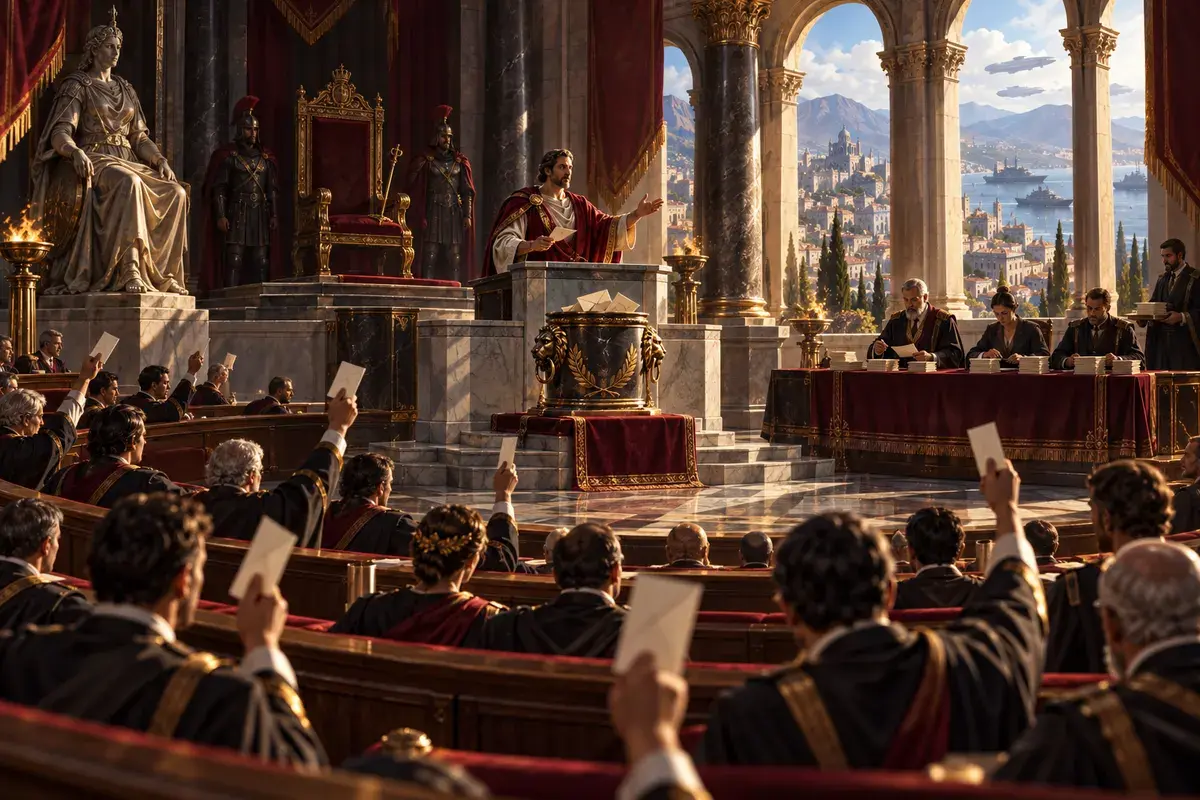
The state’s parliament decides its laws. A member of parliament proposes a law; in a republic the leader and ministers may propose one without a seat. Apart from the dictator, everyone has one open proposal at a time, and its owner can withdraw it while it is open. Only members vote: once, yes or no, and a vote cannot be changed; a member who loses the seat loses the vote.
Voting lasts 24 hours. At the deadline a law passes when yes outnumbers no; a tie or no votes rejects it. When yes votes exceed half of the parliament’s seats, the law passes without waiting; region independence always waits the 24 hours. Fast laws such as taxes, treasury transfers and alliances are accepted by the minister in charge or the leader with a single approval instead of the parliament; the leader’s own state name and flag proposals apply at once.
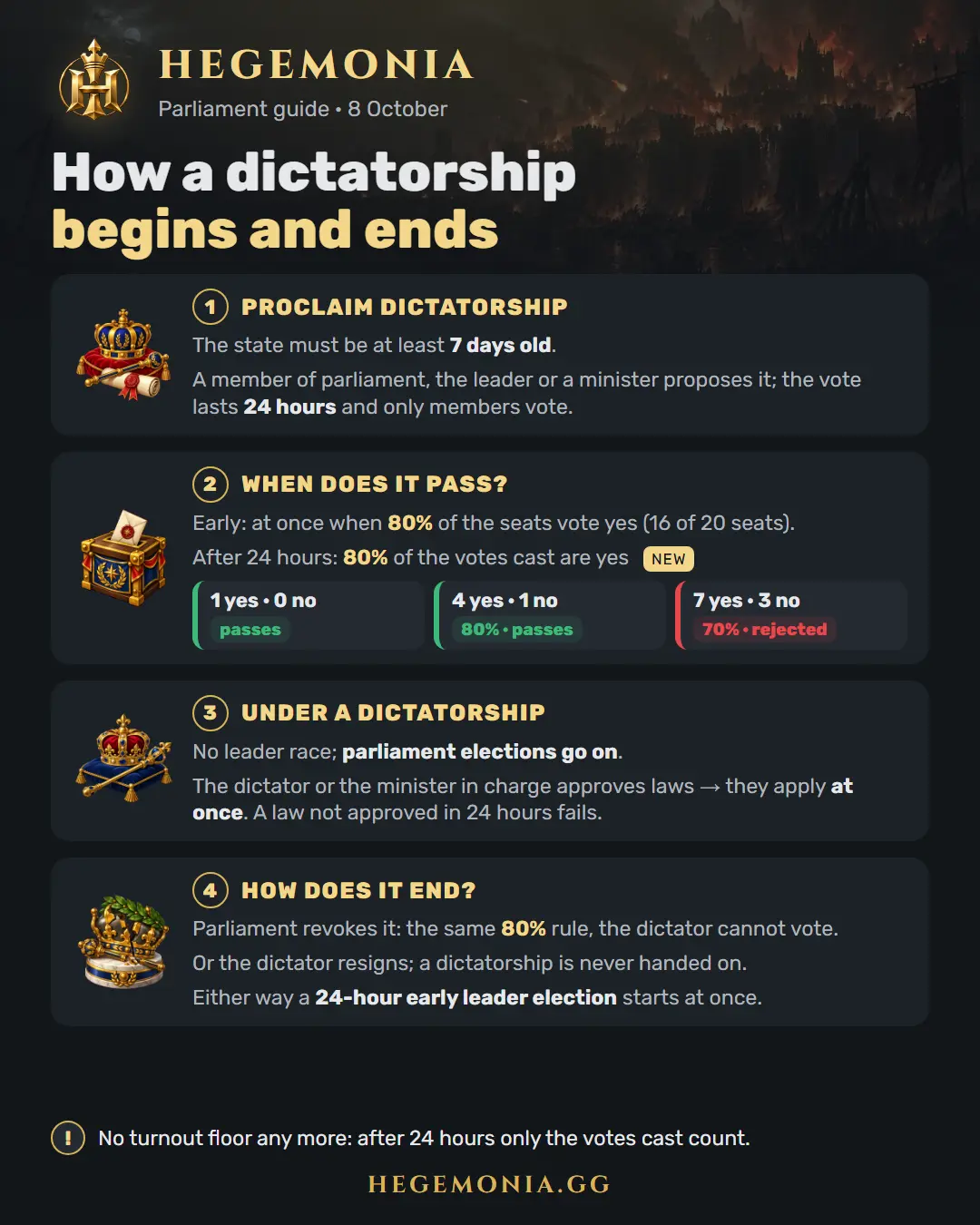
Proclaiming and revoking a dictatorship are 80% laws. They pass at once when 80% of the seats vote yes; at the deadline they pass when 80% of the votes cast are yes, with no turnout requirement. To proclaim a dictatorship the state must be at least 7 days old.
In a dictatorship the leader race stops and parliament elections go on. Laws other than fast laws are approved by the dictator or the minister in charge and apply at once; a law not approved within 24 hours fails. Parliament revokes the dictatorship with the same 80% rule and the dictator cannot take part in that vote. If the dictator resigns, the dictatorship ends and is never handed on; either way a 24-hour early leader election starts at once.
 State, leadership and applications
 Parties and playing together
 War rules
 Location and travel